
Lease or buy laptops for your Malaysian startup? 2026 comparison: cost structure, cash flow, tax treatment, and hybrid models by company size.
Laptop Leasing vs Buying for Malaysian Startups: 2026 Cost Comparison
For a bootstrapped Malaysian startup, every ringgit allocation decision carries weight. Laptops are unavoidable — even the leanest software or services business needs reliable hardware for every team member. The question is not whether to spend money on laptops, but how to structure that spend to preserve cash flow while keeping your team productively equipped.
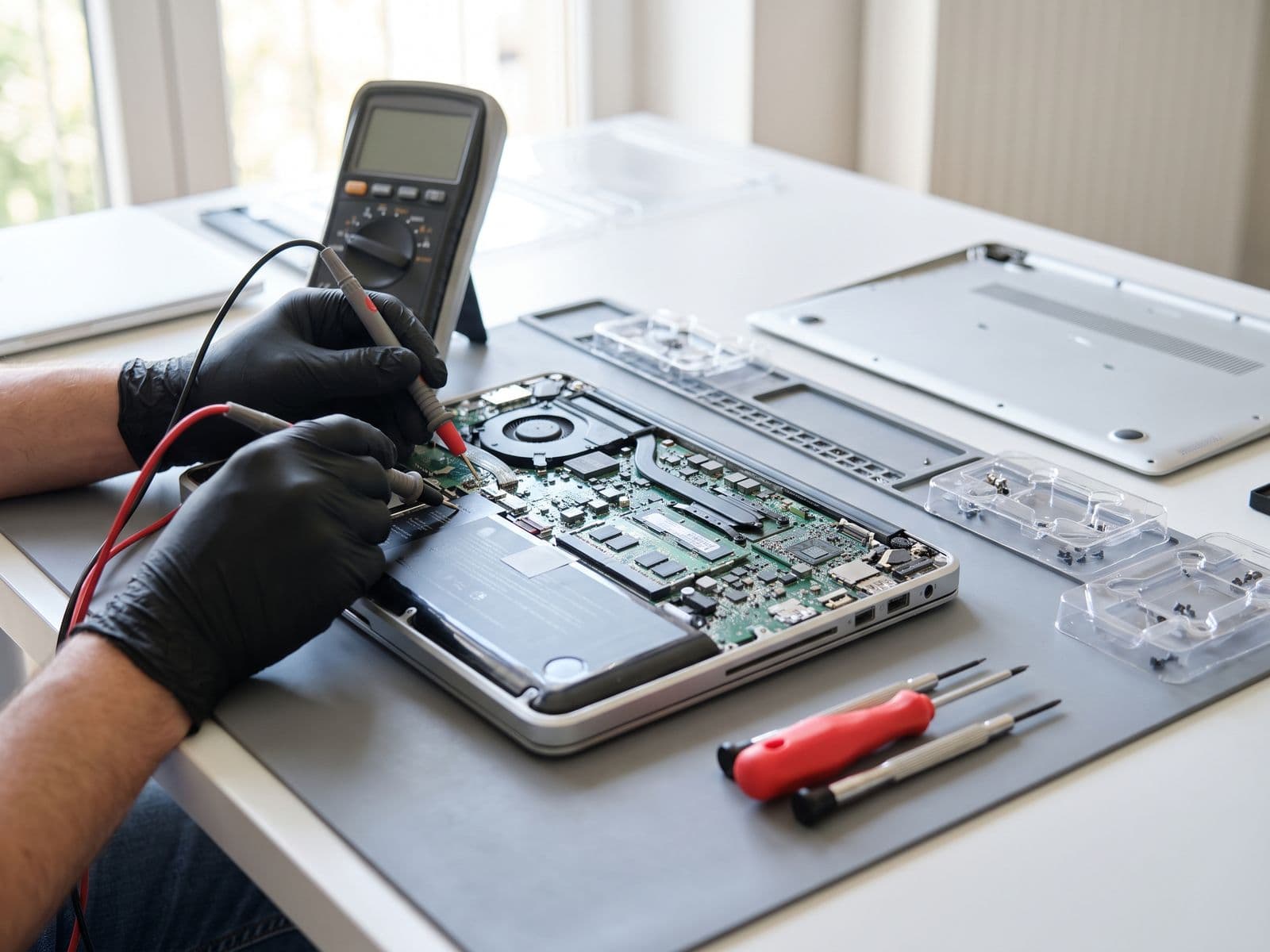
This guide gives you an honest, structure-based comparison between leasing, buying outright, and the increasingly popular third option: buying plus a structured maintenance and repair agreement. TechFix no longer provides laptop rental inventory; our role is to help teams keep owned devices reliable through repair, fleet maintenance, and managed IT support.
The Three Models Explained
Model 1: Device-as-a-Service (DaaS) / Leasing
You pay a monthly fee per device. The leasing company owns the hardware. At the end of the lease term (typically 2-3 years), you return the devices, refresh to the latest models, or buy out at residual value.
Main providers operating in Malaysia:
- Dell DaaS Malaysia — ProSupport Plus with Pro Flex leasing, available through Dell direct and authorised partners
- HP Device as a Service — HP Sure Click security included, available through HP channel partners
- Lenovo DaaS — Premier Support with on-site coverage, available through Lenovo Malaysia distributors
- Ingram Micro / TD SYNNEX — Multi-brand DaaS programs for SME
Pricing: DaaS monthly rates vary by brand, device tier, support level, and lease term. Request written quotations from the providers above for the same specification and compare them on the total over the full term, including support and end-of-lease charges.
Model 2: Buying Outright
You purchase devices, own them from day one, and manage maintenance and support yourself or through a third-party partner.
Pricing: New and refurbished prices change often. Get written quotations from your hardware supplier for the exact configuration you need, and compare the new and refurbished options against the support and warranty each includes.
Model 3: Buy + TechFix Fleet Maintenance
Purchase devices outright (new or refurbished), then enrol in a structured fleet maintenance programme. This model captures ownership benefits while removing the maintenance risk that makes buying feel unpredictable.
What our fleet maintenance programme includes:
- Proactive maintenance (thermal paste refresh, storage health check, battery assessment) every 18-24 months
- A detailed asset register and repair history for each device
Scope and pricing are agreed with our corporate team; repairs are quoted after diagnosis and no work starts until you approve the quote.
Total Cost of Ownership: How to Compare
The only fair comparison is Total Cost of Ownership (TCO) over the same period. Build your own model for your team size and device tier, using written quotations rather than estimates:
- Lease (DaaS): monthly rate x devices x months, plus end-of-lease damage charges and any early termination or redeployment fees. You own nothing at the end unless you buy out.
- Buy only: purchase price, ad hoc repair costs, and disposal, less the residual value of the devices at the end of the period.
- Buy + maintenance: purchase price, a planned maintenance and repair budget, and disposal, less a residual value that is usually higher on well-maintained devices.
Over a typical 3-year period, owning devices and maintaining them usually costs less in total than leasing, but the answer depends on the quotes you actually receive. Run the numbers with your own figures before deciding.
Cash Flow Comparison
This is where leasing makes its strongest case, not total cost but cash flow. DaaS spreads the cost into steady monthly payments, while buying concentrates most of the outlay in Year 1. For seed-stage startups with limited capital, that difference can fund additional runway, which is the legitimate case for leasing.
However: if you have secured Series A funding or have consistent monthly revenue, the long-term cost penalty of leasing is rarely justified.
Tax Deductions: Leasing vs Buying in Malaysia
Leasing / DaaS: Fully Deductible Operating Expense
Lease payments are treated as operating expenses under the Income Tax Act 1967 and are fully deductible in the year of payment. This means:
- Lease payments are deducted against business income in the year you pay them
- At the SME tax rate, each ringgit of lease expense reduces tax by that rate
- No capital allowance schedule to manage
Buying: Capital Allowance (Depreciation)
Purchasing laptops and computing equipment qualifies for capital allowance:
- Initial allowance: 20% of cost in the year of purchase
- Annual allowance: 20% per year thereafter
- Full cost recovered over 5 years
In Year 1 you claim the initial allowance plus the annual allowance (40% of cost), then the annual allowance (20% of cost) in each following year until the cost is recovered.
Repair and maintenance costs (including your TechFix fleet plan) are opex and 100% deductible in the year incurred.
Which Is Better for Tax?
For a pre-revenue or loss-making startup: capital allowances may not be immediately useful if you have no taxable income to offset. Leasing's opex treatment is more flexible.
For a profitable startup: buying gives you a significant upfront deduction (40% Year 1) on a larger absolute spend, which typically delivers greater total tax savings over the asset lifetime compared to the leasing equivalent.
Best Approach by Company Size
5 Employees — Early Stage Startup
Recommended: Refurbished Buy + TechFix Support
At 5 people, the absolute spend is small enough that cash flow risk is manageable. Buy refurbished MacBook Air M2 or ThinkPad E-series devices, which usually cost less than new. Enrol in TechFix fleet maintenance from day one. Compare the Year 1 outlay against DaaS quotes, and remember that owned devices keep resale value while leased devices do not.
20 Employees — Growth Stage Startup
Recommended: Buy New (Business Tier) + TechFix Fleet Plan
As the TCO comparison above shows, buying with a maintenance plan usually costs less over 3 years than DaaS at this scale. Unless you are pre-revenue and preserving cash is existential, the buy model usually wins at 20 employees.
For MacBook-heavy teams (common in tech and design), the even longer lifespan of Apple Silicon MacBooks (5-7 years versus 4-5 years for Windows) makes buying particularly advantageous.
50 Employees — Scaling Startup / SME
Recommended: Mixed fleet — Buy MacBooks, DaaS for standard Windows units
At 50 employees, role differentiation typically matters. Power users (engineers, designers, executives) on owned MacBooks or premium Windows devices. Support, admin, and customer success roles on DaaS Windows units where predictable monthly cost and easy swap-out suits high staff turnover.
Centralise fleet maintenance for the owned devices through a single partner like TechFix for predictable costs.
100 Employees — Series B+ or Established SME
Recommended: Buy with enterprise fleet management + a formal repair agreement
At 100 employees, you have the scale to negotiate meaningful corporate pricing on both hardware and support. Purchase devices in bulk from brand-direct programmes (Dell, Lenovo, Apple Business) and ask each for a volume quotation.
Engage TechFix on a formal fleet services agreement; scope is agreed with our corporate team. Contact us at corporate repair solutions to structure an agreement for your scale.
The Hidden Costs Most Startups Overlook
DaaS Hidden Costs
- Damage charges at return: Anything beyond normal wear and tear — screen cracks, keyboard damage, chassis dents — triggers charges at lease-end. Budget for end-of-lease damage assessments.
- Early termination fees: Scaling down headcount mid-lease can result in penalties of remaining payments.
- Upgrade friction: Mid-lease upgrades typically involve starting a new lease at a higher rate rather than crediting previous payments.
- Data handling at return: Ensuring PDPA-compliant data wiping before returning leased devices requires a documented procedure many startups skip.
Buy-Only Hidden Costs
- Unexpected repair spikes: Without a maintenance plan, repair costs are unpredictable. A month where several devices fail simultaneously can create a large unplanned expense.
- Productivity loss: Unplanned downtime while waiting for repairs without a loaner provision.
- No proactive maintenance: Battery degradation, thermal throttling, and storage issues quietly reduce productivity before they cause failure.
The TechFix Fleet Plan Advantage
The Buy + TechFix model converts the unpredictable repair cost of buying into a fixed, budgetable annual expense. You capture the full long-term cost advantage of ownership while removing the variance that makes some finance teams prefer leasing.
Choosing the Right Device Strategy for Your Business
If leasing or Device-as-a-Service suits your business stage, work with a dedicated hardware leasing provider and keep the support scope clear in the contract. If you choose to own your devices, TechFix can help with fleet maintenance, business laptop repairs, lifecycle planning, and managed IT support so the fleet stays productive without a rental programme.
Frequently Asked Questions
Q: Can a Malaysian startup deduct laptop purchases from business income in Year 1? Laptops and computing equipment are capital expenditure eligible for capital allowance under Schedule 3 of the Income Tax Act 1967. In Year 1, you can claim an initial allowance of 20% plus an annual allowance of 20%, giving a total 40% deduction in the year of purchase. The remaining 60% is deducted over subsequent years. This is different from opex items (repairs, maintenance, leases) which are 100% deductible in the year incurred. Consult your accountant for your specific tax position.
Q: Is it worth buying refurbished laptops for a startup to reduce upfront costs? Certified refurbished laptops from reputable sources — Apple Certified Refurbished, Dell Certified Refurbished, or quality third-party refurbishers — usually cost less than new, so check the warranty each seller includes. For non-critical roles, this is a sensible option. For engineering or design roles where performance is critical, buying new (or the latest generation refurbished) is recommended.
Q: What happens to leased devices when an employee leaves the company? Under most DaaS agreements, the lease is with the company rather than the individual employee. When an employee leaves, the device can be reassigned to a new hire with no change to the lease terms. Some providers charge a device reimage or redeployment fee, so factor this in for high-churn roles.
Q: How do I negotiate better pricing on corporate laptop purchases in Malaysia? For orders of 10 or more units, contact Dell, Lenovo, HP, or Apple Business directly or through an authorised business reseller rather than retail. Request a formal quotation specifying: unit quantity, model configuration, and your company registration number. For larger orders, ask about extended warranty, deployment services, and account management.
Ready to make owned devices more predictable? If your startup is still evaluating the buy-vs-lease decision, talk to TechFix about managed IT services or corporate repair solutions for fleet maintenance, repairs, and device lifecycle planning.