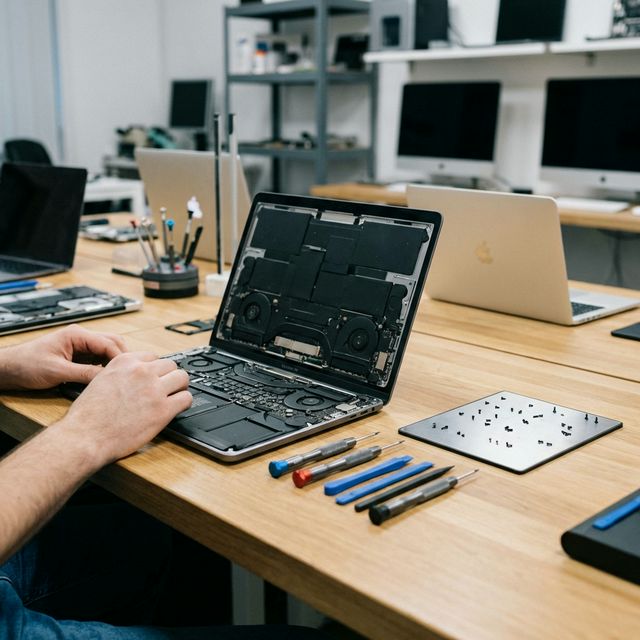
Original vs OEM vs aftermarket iPhone screens — what the tiers mean. Quality, pricing, True Tone, Face ID compatibility, and warranty implications.
iPhone Screen Repair: Original vs Third-Party — What You Actually Need to Know
When you search for iPhone screen repair in Malaysia, you'll encounter terms like "original", "OEM", "refurbished", "OLED copy", and "aftermarket". These terms are often used loosely — and sometimes dishonestly. This guide explains exactly what each term means, how to evaluate quality, and what you're actually paying for.
What Each Term Actually Means
Original / Original Apple Parts
These are screens manufactured by Apple's suppliers (primarily Samsung Display and LG Display for OLED panels, Sharp for older LCD). They are:
- Pulled from new iPhone units or Apple's official service channel
- Calibrated to Apple's exact specifications
- Guaranteed to support True Tone, ProMotion, and Face ID fully
- Only available through Apple Authorized Service Providers (AASP)
- Most expensive option — Apple sets prices
OEM (Original Equipment Manufacturer) Parts
OEM parts are made by the same factories that supply Apple, but sold through alternative channels. Think of it as the same production line, different packaging:
- Identical or near-identical display panels
- Often sourced from factories like BOE, Tianma, or secondary Samsung/LG supply chains
- True Tone support: partial to full (depends on chip)
- Face ID: fully compatible (screen doesn't affect Face ID)
- Usually come with a calibration chip that partially supports True Tone
- Best value — 30–50% cheaper than original, very close quality
Aftermarket / Third-Party Copy Screens
These are screens manufactured independently, not by Apple's supply chain:
- Quality varies enormously — from nearly OEM-quality to very poor
- May use lower-grade LCD panels with reduced brightness, contrast, and colour accuracy
- True Tone: usually not supported or works poorly
- Touch sensitivity: may feel different — stiffer or less responsive
- Lifespan: shorter — typically 12–18 months vs 3+ years for OEM/original
- Cheapest option — but you often get what you pay for
Refurbished Screens
Refurbished screens use a mix of original and replacement parts:
- Original glass is replaced on an original OLED panel, or
- Original frame is reused with a new panel
- Quality depends entirely on the refurbisher's standards
- Reputable refurbishers produce excellent quality; unknown sources may not
- Mid-range pricing — between aftermarket and OEM
Quality Comparison Table
| Feature | Original Apple | OEM Quality | Aftermarket | Refurbished |
|---|---|---|---|---|
| Brightness (nits) | 800–2000 nit | 700–1800 nit | 400–800 nit | 600–1600 nit |
| Colour Accuracy (DeltaE) | < 2 | < 3 | 3–8 | 2–4 |
| True Tone Support | Full | Partial–Full | None | Partial |
| ProMotion (120Hz) | Full | Full | Limited | Full |
| Touch Sensitivity | Exact | Near-exact | Variable | Near-exact |
| Face ID Compatibility | Full | Full | Full | Full |
| Typical Lifespan | 3–5 years | 2–4 years | 1–2 years | 2–3 years |
| Warranty (at TechFix) | 90 days | 90 days | 60 days | 60 days |
Key fact: Face ID is stored in the Face ID sensor module, not the screen. Any replacement screen — original, OEM, or aftermarket — is fully Face ID compatible as long as the repair doesn't damage the Face ID sensor or flex cable.
Price Comparison: Original vs OEM vs Aftermarket by iPhone Model
iPhone 13 Series
| Screen Type | iPhone 13 Mini | iPhone 13 | iPhone 13 Pro | iPhone 13 Pro Max |
|---|---|---|---|---|
| Original (AASP) | RM 480 | RM 550 | RM 780 | RM 880 |
| OEM Quality | RM 320 | RM 380 | RM 550 | RM 620 |
| Aftermarket | RM 150 | RM 180 | RM 250 | RM 280 |
iPhone 14 Series
| Screen Type | iPhone 14 | iPhone 14 Plus | iPhone 14 Pro | iPhone 14 Pro Max |
|---|---|---|---|---|
| Original (AASP) | RM 620 | RM 680 | RM 920 | RM 1,050 |
| OEM Quality | RM 420 | RM 460 | RM 640 | RM 720 |
| Aftermarket | RM 200 | RM 220 | RM 320 | RM 380 |
iPhone 15 Series
| Screen Type | iPhone 15 | iPhone 15 Plus | iPhone 15 Pro | iPhone 15 Pro Max |
|---|---|---|---|---|
| Original (AASP) | RM 780 | RM 850 | RM 1,100 | RM 1,250 |
| OEM Quality | RM 480 | RM 520 | RM 720 | RM 820 |
| Aftermarket | RM 240 | RM 260 | RM 380 | RM 430 |
iPhone 16 Series
| Screen Type | iPhone 16 | iPhone 16 Plus | iPhone 16 Pro | iPhone 16 Pro Max |
|---|---|---|---|---|
| Original (AASP) | RM 880 | RM 950 | RM 1,280 | RM 1,450 |
| OEM Quality | RM 540 | RM 580 | RM 820 | RM 920 |
| Aftermarket | RM 260 | RM 300 | RM 420 | RM 480 |
Durability and Longevity Differences
Glass Hardness
Original and top-tier OEM screens use Ceramic Shield (iPhone 12 and later) or Ion-strengthened glass. Lower quality aftermarket screens often use standard glass that scratches and cracks more easily.
OLED Panel Burn-In Resistance
Apple's OLED panels are tuned with burn-in compensation algorithms in iOS. Third-party panels without proper chip integration may experience faster burn-in — you'll see ghost images of navigation bars or keyboard keys appearing permanently.
Adhesive and Waterproofing
Original and OEM screens use the same adhesive and gaskets that maintain the iPhone's IP rating. Low-quality aftermarket screens often use inferior adhesive that compromises water resistance — a significant concern in Malaysia's tropical climate.
Long-Term Performance
After 12–18 months:
- Original screens: Maintain brightness and colour accuracy
- OEM screens: Very minor degradation, generally imperceptible
- Aftermarket screens: May show yellowing, reduced touch sensitivity, or brightness drop
Warranty Implications
Apple's Warranty: Any non-Apple repair voids Apple's remaining warranty or AppleCare+ coverage for screen-related issues. This applies regardless of whether original or third-party parts are used at a non-AASP shop.
Malaysia Consumer Protection Act: Under Malaysian law, consumers have rights regardless of warranty terms. A product that fails within a reasonable time can still be claimed under the Consumer Protection Act 1999.
TechFix Warranty: All screen replacements at TechFix include a 90-day warranty on parts and labour. This covers defects, touch issues, and display problems — regardless of which quality tier you choose.
How to Tell If Your Screen Was Replaced With Non-Original Parts
iOS Settings Warning (iPhone 12 and Later)
Go to Settings → General → About. If a non-original screen was installed, you may see: "Unable to verify this iPhone has a original Apple display."
This warning appears for OEM and aftermarket screens alike — it's a software check Apple added, not a quality indicator. An OEM screen that performs identically to original will still trigger this message.
Physical Signs of Lower Quality
- Touch response feels slightly off — stiffer, less fluid
- Colours look slightly cooler or warmer than before
- True Tone is missing or doesn't adapt naturally to lighting
- Brightness feels dimmer especially in direct sunlight
- Edges of the screen feel slightly raised — poor adhesive application
What Good OEM Looks Like
A quality OEM screen should feel indistinguishable from original in day-to-day use. True Tone may behave slightly differently in edge cases, but colour, brightness, and touch response should be excellent.
TechFix's Approach: OEM Quality with Full Transparency
At TechFix Malaysia, we use OEM-quality screens as our standard for iPhone repairs. Here's our approach:
- We source screens from vetted suppliers with consistent QC records
- Every screen is tested before installation: brightness, touch calibration, dead pixel check
- We test Face ID compatibility post-install
- We test True Tone behaviour and notify you of any limitations
- We offer original Apple screens on request (priced accordingly)
- We do not use unbranded aftermarket screens — quality consistency is too low
We believe in transparency: if there's a True Tone limitation with an OEM screen for your specific model, we'll tell you before we start the repair.
Frequently Asked Questions
Will True Tone still work after iPhone screen replacement in Malaysia? With OEM-quality screens, True Tone works in most cases — though you may see the iOS "Unable to verify" message. Full True Tone behaviour requires the calibration chip from Apple's supply chain, which top-tier OEM screens include. Aftermarket screens typically don't support True Tone.
Does iPhone screen replacement affect Face ID? No. Face ID is handled by the TrueDepth camera module, which is separate from the screen. Any properly installed screen — original, OEM, or aftermarket — maintains full Face ID functionality, as long as the repair doesn't disturb the Face ID sensor.
Why is Apple screen replacement so much more expensive? Apple Authorized Service Providers pay a premium for Apple-original parts and must use Apple's proprietary diagnostic tools. They also charge premium labour rates. The quality difference over top-tier OEM is generally imperceptible for most users — but if you want the iOS "original display" confirmation, original parts are the only option.
How do I know which screen quality my repair shop used? Ask directly before the repair. A reputable shop will tell you exactly what they're using — "OEM", "original pull", or "aftermarket" — and the quality implications. If they say "original" but the price seems very low, ask for clarification. True Apple-original screens at independent shops are extremely rare.
Book Your iPhone Screen Repair
TechFix uses OEM-quality screens with full transparency on quality and limitations. Walk in or book online.
- iPhone Screen Replacement — All models, same-day service
- iPhone Repair Malaysia — Full iPhone repair services
- Book Online — Reserve your slot
Walk-in: Sunway Geo Avenue, G-06-28, Block G WhatsApp: 017-355 5725